


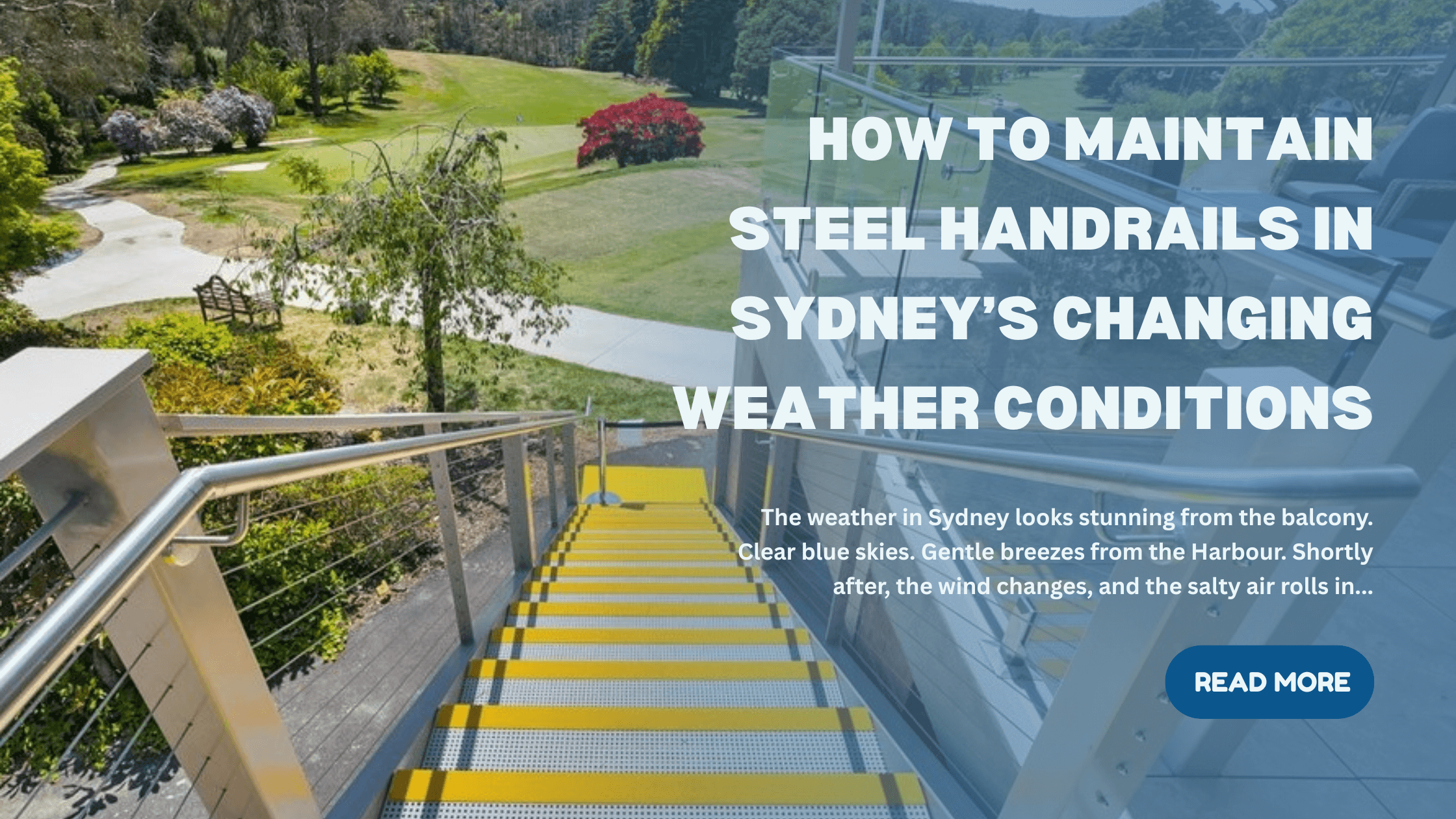
The weather in Sydney looks stunning from the balcony. Clear blue skies. Gentle breezes from the Harbour. Shortly after, the wind changes, and the salty air rolls in, making your steel handrails wear every season on their surface. Even the stainless steel handrails Sydney need regular maintenance to maintain the shine. Well-maintained steel rails remain smooth, safe, and contemporary.
In contrast, the neglected rails start to stain, pit, and loosen at the worst possible time.
To keep your handrails in good condition despite the ever-changing weather, you need to have a straightforward plan that does not call for special equipment.
Know what Sydney weather does to steel
Sydney gives your handrails a tough workout throughout the year.
- Sea air and rain’s moisture and salt eventually attack the stainless steel’s protective layer.
- UV light makes coatings discoloured, and some finishes fragile over a long period.
- Unstable Temperature causes expansion and contraction of the material. Water may enter tiny spaces at the joints and fixings.
- Air pollution, dust, accumulates on the horizontal parts and retains moisture.
Stainless steel is manufactured to resist corrosion. The composition of chromium creates a thin layer of protection. In areas with heavy pollution or coastal influence, this layer must be maintained through cleaning and smart care, particularly for stainless steel handrails in outdoor spaces.
Get into a simple cleaning habit
Regular cleaning is the best way to increase the lifespan of your handrails.
- Get a bucket, fill it with warm water and a mild dishwashing detergent.
- Use a soft sponge or cloth. Wipe following the grain of the steel.
- Rinse off with clean water, leaving no soap behind.
- Use a microfibre cloth for drying to prevent water spots.
For outdoor stairs or balconies, plan for a quick clean every other week in coastal suburbs. Monthly can work for sheltered areas. Indoor rails need less care but still benefit from a wipe to get rid of fingerprints and dirt.
Do not use pressure washers at close distances. They have the potential to push water into the joints and fixings.
Treat stains and fingerprints the right way
On brushed or polished finishes, the rapid appearance of fingerprints, tea staining, and light marks is very typical.
In the case of light marks:
- A cleaner for stainless steel spray or a combination of white vinegar and water should be used.
- A soft cloth is to be used for application. Wipe along the grain.
- Dry buff until the finish appears even again.
Flat external parts where water accumulates may exhibit tea staining. This will appear as a brown film rather than deep rust. Usually, cleaning is sufficient to remove it. If the marks persist, a non-abrasive stainless steel cleaner made for exterior use can be used. Always test a small area first before treating a long stretch of rail.
Protect the surface from the wrong products
The most significant issue often inflicted by the use of harsh cleaning methods.
Do not use:
- Scourers and steel wool
- Strong acids and bleach
- Chlorine-based cleaners
- Abrasive powders
The surfaces are damaged by using products, and can strip the passive layer that prevents corrosion. A plastic scraper combined with an adhesive remover for industrial use, based on citrus and approved for stainless steel, is the best solution for stickers or heavy grime removal.
After using any specialised cleaner, the area should be washed once again with mild detergent and water. Then, let it dry completely.
Watch for early rust and fix it fast
The best stainless steel handrails Sydney still has are a risk of getting rust stains under extreme conditions. Areas with pools, near water bodies, and highways are more prone to this problem.
Handrails should be examined:
- At base plates and posts
- Around bolt heads and brackets
- •Anywhere water collects
If small orange spots are noticed:
- Clean the surface with mild detergent.
- Apply a stainless polish or cleaner with oxalic acid to remove the stain.
- Rinse and dry thoroughly.
Don’t neglect initial rust. It has the potential to spread and invade the substrate. A mere seasonal inspection keeps the issues small and cheap to fix.
Look after fixings, joints, and surrounding materials
Handrails tend to fail at joints and supports more often than in the middle of the tube.
Include this in your list of maintenance activities:
- Lightly shake posts and rails to feel for any movement.
- Inspect the concrete or tiles around for cracks.
- Inspect the sealant around the handrails where they meet the walls or floors.
- Remove any debris that may have been trapped at the base plates.
Use the proper bit to tighten the loose screws. When possible, replace standard steel fixings with stainless. Water that comes into contact with mild steel screws will cause discolouration in nearby stainless parts.
For stainless steel handrails Sydney, installers frequently choose 316 grade for sites with heavy exposure to the elements. This provides better resistance in coastal conditions, but the correct fixings and sealed contact points are needed.
Extra care in pool, balcony, and coastal zones
Certain locations necessitate a considerable amount of attention:
-
Pool surrounds
Chlorinated water, along with splashes, leads to increased exposure to chloride. So, it is better to hose down regularly and also clean often.
-
High balconies and roof decks
Very strong winds blow the salt as well as the rain into the most remote or inaccessible places. It is better to schedule no less than twice regular check-ups during and around storms.
-
Direct coastal streets
A weekly rinse with fresh water in suburbs that are very close to the ocean is very effective. Combine this with your regular cleaning.
Wherever possible, a protective wax or specialised stainless sealant should be applied for an extra layer of security. Apply a few times in a year after cleaning and drying the surface.
When to call a professional
It is a good idea to always keep on with DIY cleaning, but better to hire a specialist if you see:
- Deep pitting or flaking
- Major looseness at posts
- visible Structure movement
- Rust that disappears quickly after treatment
An informed judgment of a professional can tell if polishing, passivation, repair or replacement is the safest option.
Conclusion
Steel railings that are well maintained will remain strong and stylish throughout the entire wind, salt, rain, and heat cycle. Just with a cleaning routine, smart product choices, and regular checks, your handrails will remain safe and beautiful in the changing conditions of Sydney.
If you are after an enduring performance along with a spotless contemporary appearance, Arm Balustrade will easily navigate you through the right specifications for stainless steel handrails Sydney wide.
Explore Arm Balustrade’s stainless steel collection and find handrail solutions that not only endure Sydney’s climate but also fit your design choice.