


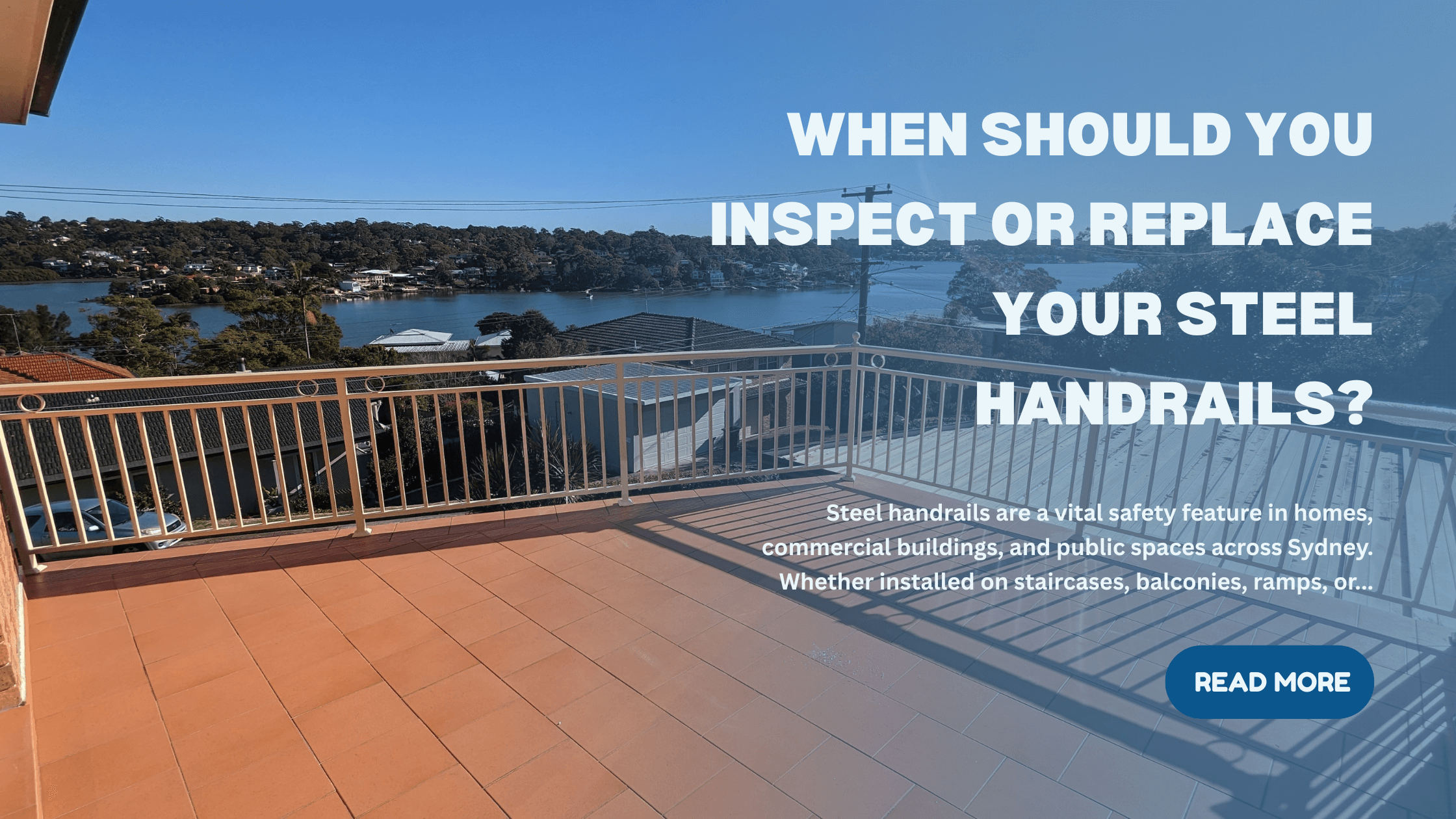
Steel handrails are a vital safety feature in homes, commercial buildings, and public spaces across Sydney. Whether installed on staircases, balconies, ramps, or outdoor walkways, handrails provide stability, protection, and visual structure. In a city like Sydney, where properties are exposed to coastal air, seasonal rain, strong sunlight, and regular foot traffic, steel handrails require ongoing inspection to remain safe and compliant.
Even premium-grade materials can deteriorate over time if they are not checked and maintained. Knowing when to inspect or replace your steel handrails helps prevent accidents, avoids costly repairs, and ensures your property continues to meet Australian safety standards.
Why Regular Handrail Inspection Matters in Sydney
Steel handrails are designed for durability, but environmental exposure and daily use gradually take their toll. Sydney’s coastal suburbs experience salt-laden air, while urban areas face pollution and dust buildup. Over time, these factors can weaken fixings, compromise joints, and reduce corrosion resistance.
Temperature changes between seasons also cause metal expansion and contraction. If left unchecked, this movement can loosen anchors and affect load-bearing performance. Regular inspections help identify early signs of wear, maintain structural integrity, and preserve the clean, modern appearance expected from stainless steel handrails Sydney properties rely on.
How Often Should Steel Handrails Be Inspected?
Inspection frequency depends on location and usage.
Residential properties should visually inspect steel handrails at least once a year. This includes staircases, balconies, decks, and entry ramps.
Commercial buildings such as offices, apartment complexes, retail spaces, and hospitality venues should inspect handrails every six months due to higher foot traffic and stricter compliance requirements.
Coastal or exposed locations, including beachfront homes and elevated balconies, benefit from inspections every three to four months because salt and wind accelerate surface wear.
Any major renovation, structural change, or severe weather event should also trigger an immediate inspection.
Key Signs Your Steel Handrails Need Attention
Certain warning signs indicate that inspection or repair should not be delayed.
Loose or unstable handrails are one of the most common issues. Even minor movement suggests fixings may be weakening.
Surface discoloration or rust staining around joints, base plates, or welds may indicate corrosion beginning beneath the surface.
Cracked welds or stressed connections reduce structural strength and should be addressed immediately.
Dents, sharp edges, or deformation caused by impact can compromise both safety and appearance.
Changes to flooring height or layout may cause handrails to fall out of compliance with current regulations, making replacement necessary.
When Is Replacement the Better Option?
Inspection does not always mean replacement, but there are situations where replacing steel handrails is the safest and most cost-effective decision.
If corrosion has penetrated beyond surface staining and affected the internal structure, repairs may no longer be reliable.
Frequent repairs within a short period usually indicate the handrail system has reached the end of its service life.
Older handrails that do not comply with current Australian standards should be replaced, particularly in commercial or strata properties.
Low-grade materials that cannot withstand Sydney’s coastal conditions should be upgraded to higher-quality stainless steel.
Many builders and property owners compare performance benchmarks against premium stainless steel handrails Sydney developments use, where durability and compliance are non-negotiable.
Why Stainless Steel Remains the Preferred Choice
Stainless steel continues to be the most trusted material for handrails across Australia due to its strength, corrosion resistance, and low maintenance requirements.
Grade 304 stainless steel is commonly used for indoor and sheltered environments.
Grade 316 stainless steel is ideal for coastal and high-exposure areas, offering superior resistance to salt and moisture.
This is why stainless steel handrails Sydney architects and developers specify are often used as the benchmark for quality, longevity, and safety.
Professional Inspection vs DIY Checks
Basic visual inspections can be performed by homeowners, but professional assessments provide deeper insight. Qualified inspectors can evaluate anchor strength, load performance, hidden corrosion, and regulatory compliance.
Professional inspections are especially important for commercial buildings, strata properties, and public spaces. They also provide documentation that supports insurance requirements, safety audits, and property resale.
Final Thoughts
Steel handrails are a long-term safety investment, but they only perform as intended when they are inspected and maintained regularly. In Sydney’s varied climate, proactive inspection helps prevent accidents, reduces long-term costs, and keeps properties compliant with Australian standards.
Knowing when to inspect or replace your handrails protects both people and property while preserving the clean, modern look that quality steel systems provide.
At ARM Balustrade, we manufacture and supply export-quality handrail systems designed to meet the expectations of stainless steel handrails Sydney projects. Our products are engineered for strength, durability, and compliance, making them suitable for residential, commercial, and architectural applications across Australia.